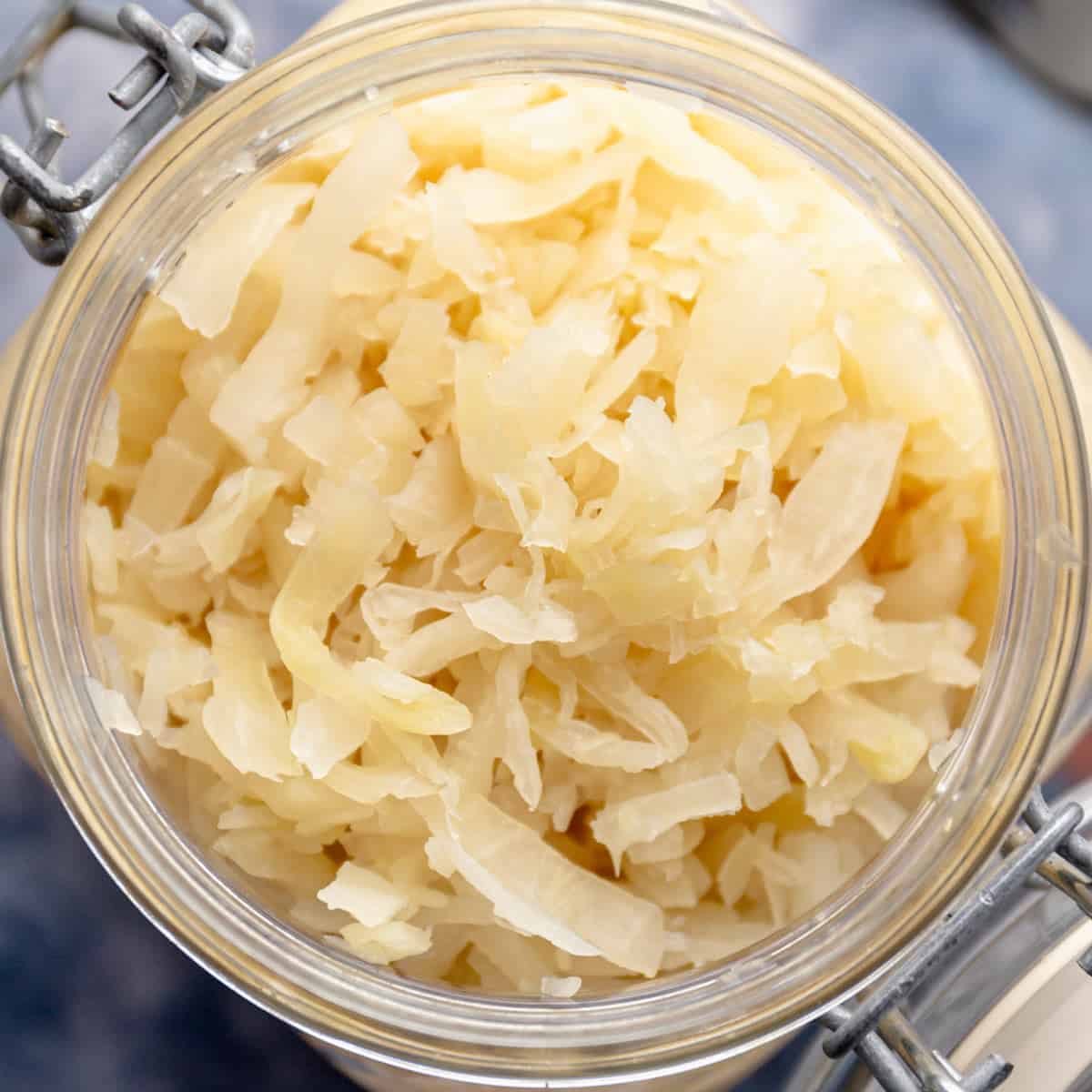
Prep the cabbage: Rinse the cabbage and remove any wilted outer leaves.
Cut and slice: Quarter the cabbage using a sharp knife. Remove the core, then slice into thin strips (about ¼ inch wide). The strips don’t need to be perfectly even. You can also use pre-shredded cabbage if preferred.
Salt: Transfer the sliced cabbage to a large bowl and evenly sprinkle sea salt over it.
1 tablespoon sea salt, 3 pounds green cabbage
Mash the cabbage: Using clean hands, massage and squeeze the cabbage to release its juices. There’s no special technique—just keep working it.
Continue mashing: Knead for about 5–8 minutes, until you see a pool of salty liquid forming at the bottom of the bowl.
Pack into jar: Take a few handfuls of cabbage and place them into a glass jar. Press down firmly with a wooden spoon to remove air bubbles.
clean glass jar
Repeat packing: Continue adding and pressing the cabbage in batches until the jar is almost full, leaving about 1–2 inches of space at the top.
Check liquid level: The cabbage should be fully submerged in its own juices. If not, prepare a 2% brine.
Make brine (if needed): Dissolve 1 tablespoon of fine sea salt in 4 cups of non-chlorinated water. Use this to top off the jar. Store any leftover brine in the fridge.
1 tablespoon salt, 4 cups water
Submerge cabbage: Pour brine over the cabbage if needed, keeping everything fully covered. Leave about 2 inches of headspace. If at any point during fermentation the cabbage rises above the liquid, you can use the reserved brine to top it up and keep it submerged.
Keep cabbage down: If the cabbage floats, use a glass weight or wedge a piece of cabbage core on top to hold it under the liquid.
Cover jar: Cover with a linen cloth or similar breathable cover and secure with a rubber band.
Ferment: Place the jar in a dark spot at room temperature, away from direct sunlight, for at least one week.
Prevent spills: Set the jar on a tray or dish to catch any overflow. After a day or so, open the jar briefly to release trapped gases.
Check readiness: After one week, taste and smell the sauerkraut. If it’s tangy enough, move it to the fridge. If not, let it ferment longer.
Serve: Enjoy as a side dish, add to stir-fries, or use in soups like Polish sauerkraut soup.