

To keep chicken breast juicy, pound it to an even thickness, salt it early, and pull it off the heat at 160 to 162 degrees Fahrenheit so it coasts up to a safe 165 while it rests. Chicken breast has almost no fat, so it goes from perfectly cooked to dry in a few degrees. The thermometer matters more than the clock.
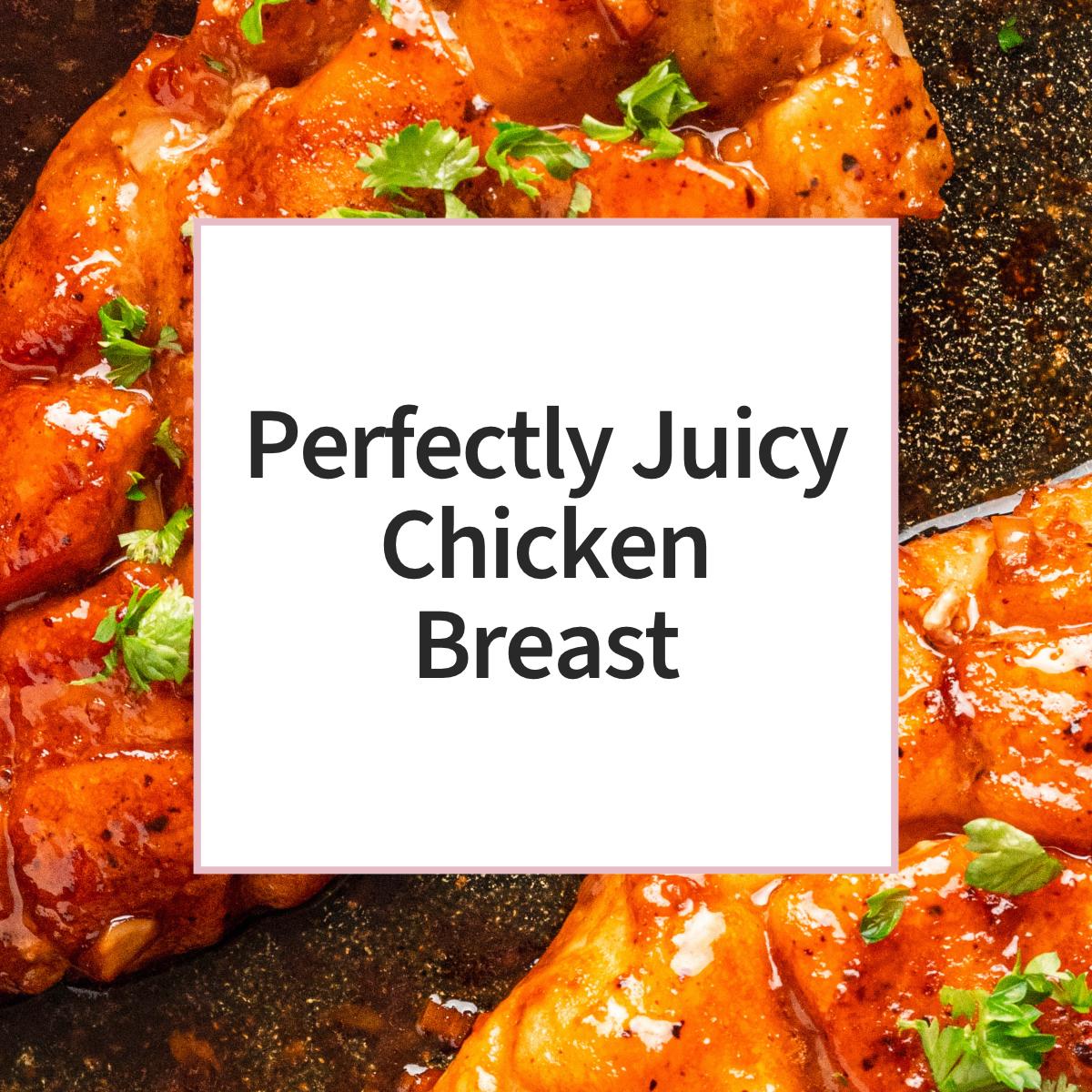
I ruined a lot of chicken breasts before I figured this out. The good news is that it is a handful of small habits, not a fancy technique.
Disclosure: This post contains affiliate links. If you purchase through one of my links, I may earn a small commission at no extra cost to you. Thank you for supporting my blog!
Want to Save This Recipe?
Enter your email and we’ll send the recipe directly to you!
By submitting this form, you consent to receive emails from The Yummy Bowl.
Quick Steps
- Pound the breast to an even ¾ inch, or slice a thick one in half horizontally.
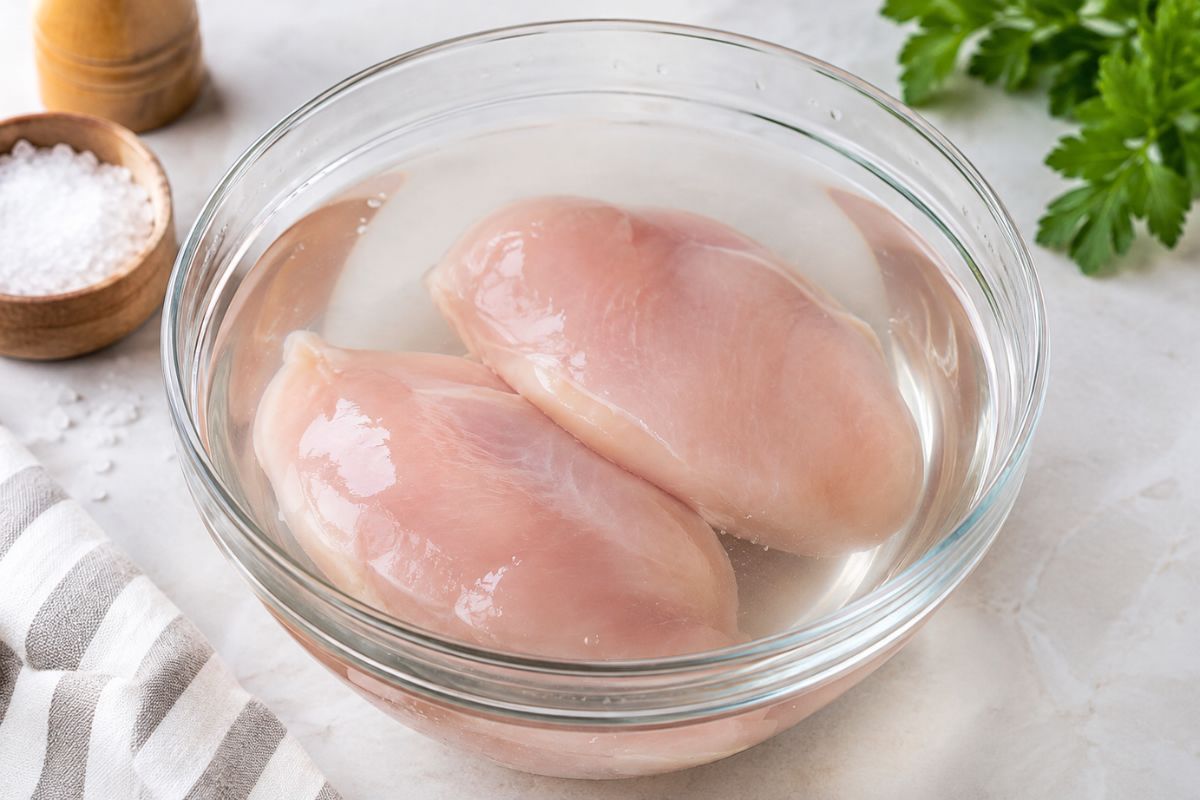
- Salt it. Soak it in a brine for 15 to 30 minutes, or dry-brine it by rubbing salt on and letting it sit.
- Pat it very dry with paper towels, then season.
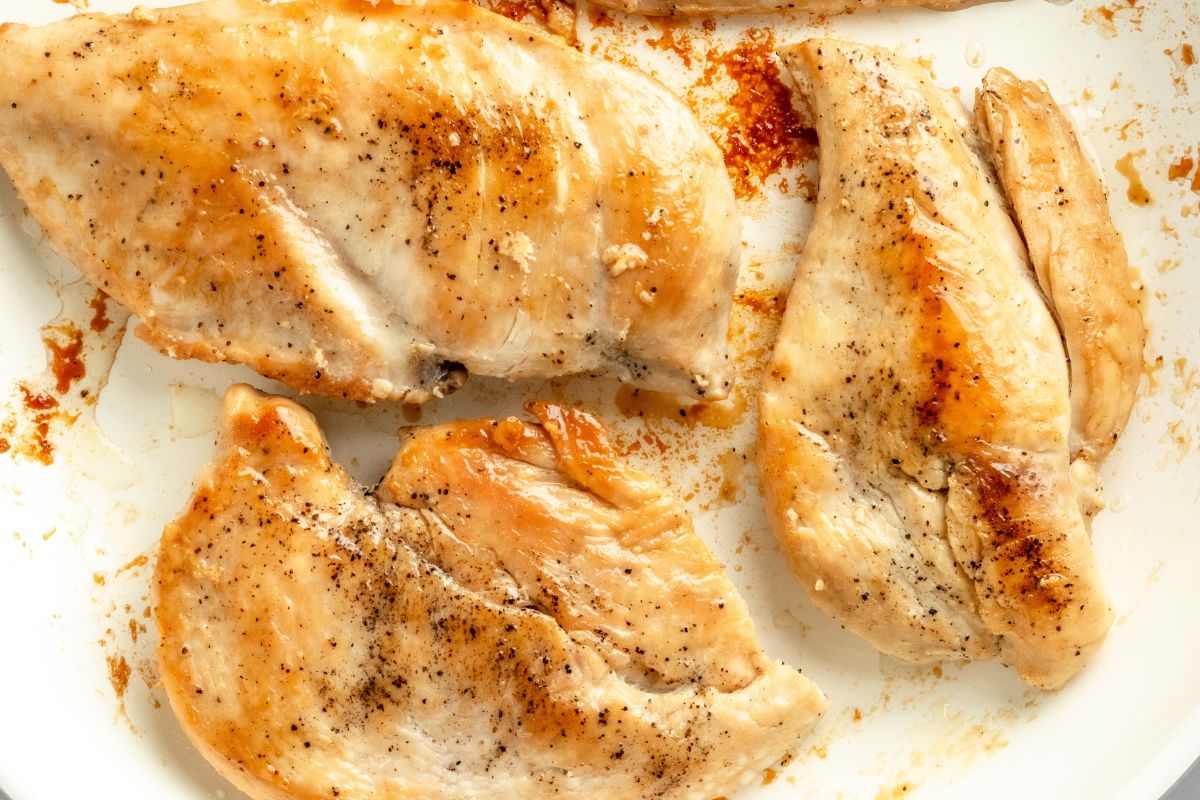
- Cook over medium-high heat, undisturbed, until the underside is golden, about 6 to 7 minutes. Flip it.
- Check the thickest part with a thermometer. Pull it at 160 to 162, rest it 5 minutes, and it will climb to 165.
- Slice against the grain.
The 5 Things That Make Chicken Breast Juicy
1. Even Thickness
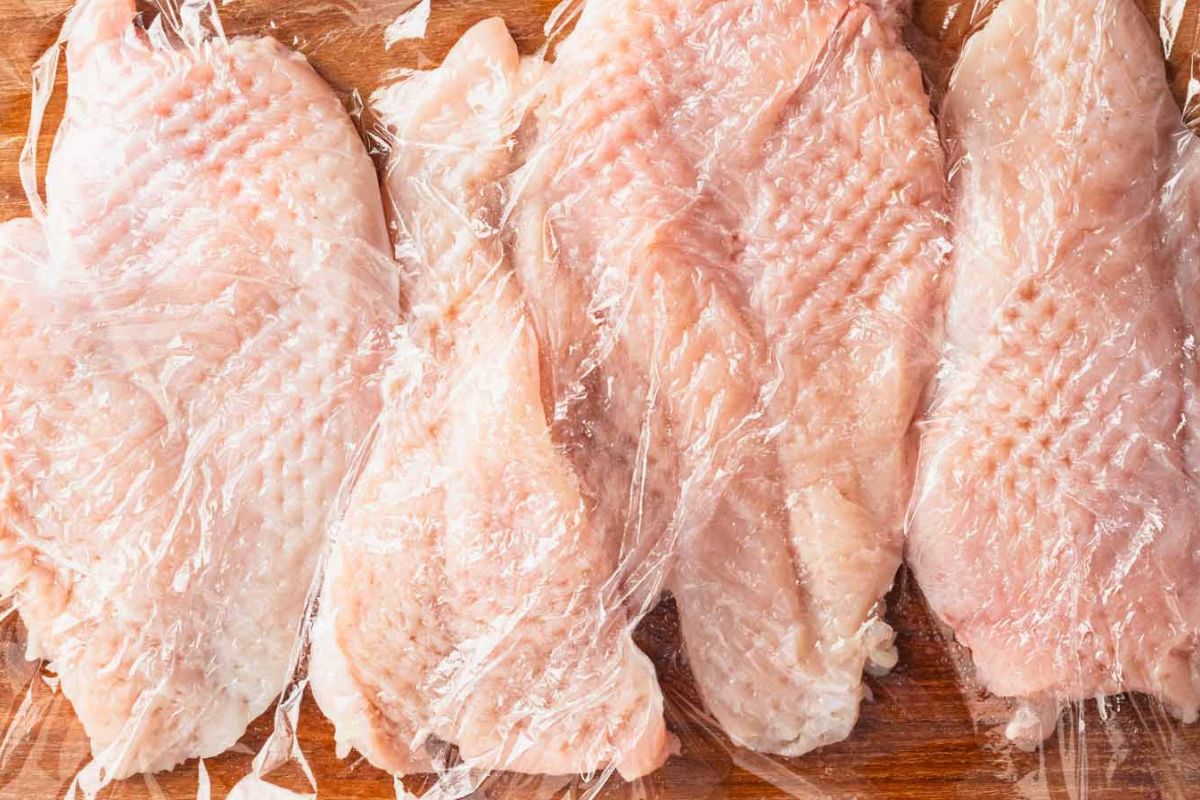
A chicken breast is shaped like a teardrop, thick on one end and thin on the other. By the time the thick end is cooked, the thin end is jerky. Put the breast between two sheets of plastic wrap and pound the thick part with a rolling pin or a heavy skillet until it is roughly ¾ inch all over.
2. Salt Early
Salt does more than season. It helps the meat hold on to its own moisture while it cooks. Even 15 minutes helps, and a few hours is better.
3. A Dry Surface
Wet chicken steams in the pan instead of browning. Pat it dry on both sides before it hits the heat. This is the step people skip, and it is the reason their chicken comes out pale.
4. The Right Temperature
Chicken is safe at 165 degrees Fahrenheit. Each extra 10 degrees pushes out more moisture, so a breast that hits 175 is a very different thing from one that stops at 165. Use an instant-read thermometer in the thickest part, away from any bone.
5. A Short Rest
Give it 5 minutes on a plate before you slice. The juices settle back into the meat. Cut it straight off the heat and they end up on the cutting board instead.
How Long to Cook Chicken Breast
These times are for a boneless, skinless breast pounded to about ¾ inch. Always check the temperature, because every stove and oven runs a little different.
| Method | Heat | Time |
|---|---|---|
| Stovetop | Medium-high, then lower, lid on for the last few minutes | About 12 to 14 minutes total |
| Oven | 425 F | 18 to 22 minutes |
| Air fryer | 375 F | 12 to 15 minutes, flip halfway |
| Grill | Direct medium heat, lid closed | 5 to 6 minutes per side |
| Poached | Bare simmer, then heat off and covered | 15 minutes off the heat |
Higher heat for a shorter time beats a long bake at 350, which slowly dries the breast out. If you want a few dinners, my Pan Seared Chicken Breast and Baked Lemon Chicken Breasts are two good ones to try these tips on.
Wet Brine vs Dry Brine
- Wet brine: Stir 1 tablespoon of kosher salt into 2 cups of water. Soak the chicken for 15 to 30 minutes. Do not go past an hour, or the texture turns spongy.
- Dry brine: Rub about ½ teaspoon of kosher salt on each breast. Leave it uncovered in the fridge anywhere from 30 minutes to overnight. This one gives the best sear because the surface of the meat dries out.
What To Do With Chicken That Is Already Dry
It happens to everybody. You have a few rescues:
- Slice it thin and add sauce. A warm pan sauce, gravy, or a spoonful of pesto covers a lot.
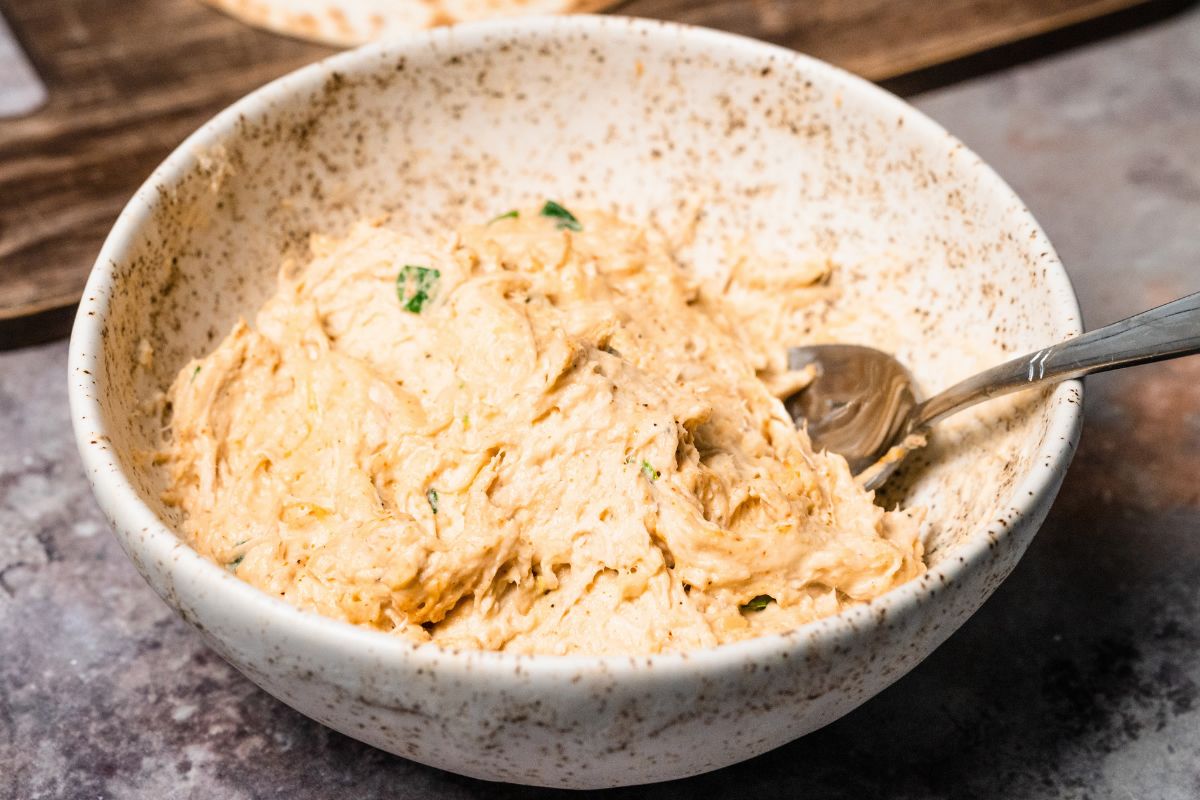
- Shred it. Dry chicken shreds fine, and it disappears into tacos, soup, or a chicken salad with plenty of dressing.
- Drop it into soup. A few minutes in hot broth brings some of the softness back. It is great in Chicken Tortilla Soup.
The Biggest Mistakes
- Cooking it straight from a cold fridge. Let it sit out for 15 minutes first so it cooks more evenly.
- Skipping the thermometer. Guessing is how you end up with chalk.
- Using high heat the whole time. Sear it, then lower the heat so the middle can catch up.
- Flipping it a hundred times. Leave it alone until it releases from the pan on its own.
- Slicing it right away. Those 5 minutes of rest are worth it.
Juicy Chicken Breast FAQs
What temperature is chicken breast done?
165 degrees Fahrenheit in the thickest part. For the juiciest result, take it off the heat at 160 to 162 and let it rest for 5 minutes. It will climb to 165 on its own, so check it again before you slice.
How do you keep chicken breast from drying out?
Pound it to an even thickness, salt it ahead, cook it with a thermometer, and rest it before slicing.
Should you cover chicken breast while cooking?
On the stovetop, a lid for the last few minutes traps steam and helps it cook through without over-browning. In the oven, leave it uncovered so it can brown.
Is it better to bake chicken breast at 350 or 425?
425. Higher heat for less time keeps more moisture in than a long bake at 350.
How can you tell chicken is done without a thermometer?
Cut into the thickest part. The meat should be opaque all the way through with no pink, and the juices should run clear. A thermometer is still a lot more reliable, and a decent one costs about what a pack of chicken does.
Can you cook chicken breast from frozen?
Yes, but it takes about 50 percent longer, and you cannot season it well until it has thawed a bit. Thawing it overnight in the fridge gives you much better results.
Why is my chicken breast tough and stringy?
Usually it is overcooked. Sometimes it is a breast with a woody texture from the farm, which has nothing to do with how you cooked it. If it keeps happening with a certain brand, try a different one.
Before You Go
Put it to use in 30-Minute Healthy Dinners or any High-Protein Dinner, or browse the Best Chicken Recipes hub for more.
More Cooking Guide

Before You Go
If you found this post helpful, I'd love to hear from you! Leave a comment below and let me know your thoughts, questions, or experiences. Your feedback helps me create content that truly serves this wonderful community. ❤️
Join TYB
Insider
Get access to exclusive recipes,
weekly meal plans, printable
grocery lists, and AD-FREE
browsing designed to make
mealtime easier.