
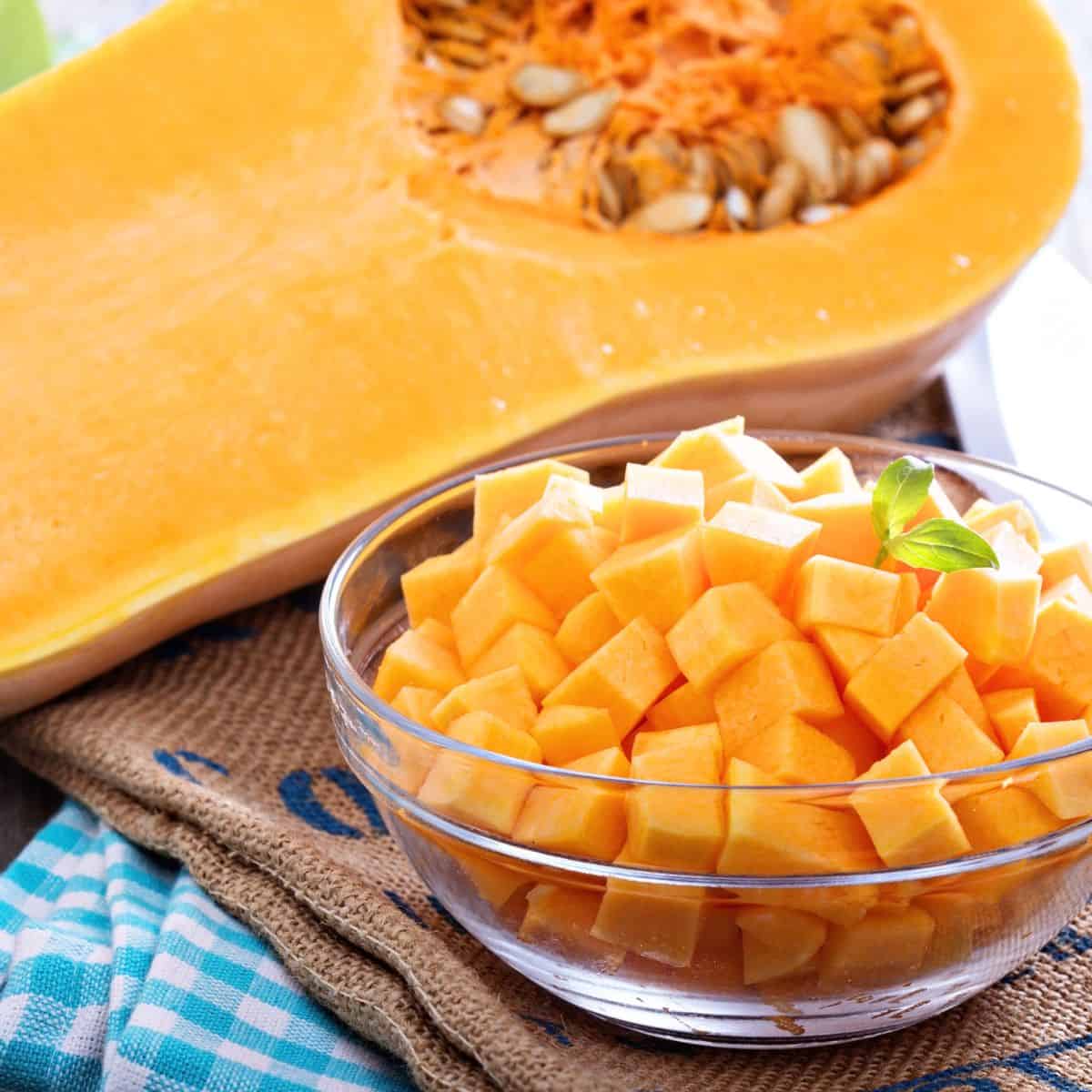
The safe way to cut a butternut squash is to trim both ends, microwave it whole for 3 to 4 minutes to soften the skin, peel with a Y-peeler, then halve it lengthwise, scoop the seeds, and cube. The microwave step is what makes it easy and keeps the knife from slipping.
Disclosure: This post contains affiliate links. If you purchase through one of my links, I may earn a small commission at no extra cost to you. Thank you for supporting my blog!

Want to Save This Recipe?
Enter your email and we’ll send the recipe directly to you!
By submitting this form, you consent to receive emails from The Yummy Bowl.
How to Cut a Butternut Squash, Step by Step
I avoided butternut squash for years because cutting one felt like a genuine safety hazard. The squash rolls, the skin is hard, and the knife wants to skate off the side. Then I learned to microwave it first and the whole thing stopped being a fight. Here is the order that works.
- Wash and dry it, then cut off both ends. Take about half an inch off the stem end and the very bottom. This is the important part: now you have two flat surfaces, so the squash can stand up instead of rolling away from you while you work.
- Microwave the whole squash for 3 to 4 minutes. This is the trick that changes everything. It softens the skin just enough that the peeler glides instead of skidding, and it does not cook the flesh. Let it sit until it is cool enough to hold comfortably, which takes a few minutes.
- Stand it up and peel from top to bottom. A Y-peeler in long downward strokes, turning the squash as you go. Then go back and take a second pass, because there is a pale green layer just under the orange skin that stays tough and tastes a little bitter. You want to see solid orange all the way around before you stop.
- Cut where the neck meets the round bulb. These two parts are completely different to work with, so separate them first. The long neck is solid flesh with no seeds. The bulb at the bottom is hollow and holds all the seeds.
- Halve the bulb and scoop the seeds out with a spoon. An ice cream scoop or a serrated grapefruit spoon works even better if you have one. Get the stringy bits too, not just the seeds themselves.
- Lay every piece flat side down before you cut it. Slice into planks, stack the planks and cut them into strips, then cut across the strips into cubes. A flat side against the board is the whole reason this feels safe instead of scary.
Why the Microwave Trick Works
Butternut skin is tough and slightly waxy, and a peeler blade needs a bit of give to bite into it. Three or four minutes of microwaving warms that outer layer just enough to soften it without cooking the flesh underneath, so the blade grips and pulls a clean strip instead of sliding sideways. That sliding is how people cut themselves.
No microwave, or a squash too big to fit? Pierce it in a few places with a knife tip and bake it at 350 degrees for about 15 minutes, then let it cool. Same effect, slower. Or skip softening entirely, but then cut the neck and bulb apart first and work with a genuinely sharp knife, because a dull blade on a hard squash is the actual danger here.
The Tools That Make This Easy
You do not need much, but two of these genuinely matter. A dull peeler and a sliding board are why this job feels dangerous.
Kuhn Rikon Original Swiss Peeler
 Buy Now →
BEST PEELER FOR SQUASH
A Y-peeler, not a straight one, and worth the few dollars. The carbon steel blade is sharp enough to pull consistent strips off tough butternut skin rather than skating over it, which is exactly where cheap peelers fail. It is America's Test Kitchen's long-running top pick and it costs about as much as a sandwich.
OXO Good Grips Carving and Cutting Board

OXO Good Grips Plastic Carving & Cutting Board - White, 14.34 In x 21.11 In
Buy Now →BEST CUTTING BOARD
Big enough that a whole squash neck fits without hanging off the edge, with a juice groove and corner grips so it does not travel across the counter. Whatever board you use, set it on a damp kitchen towel first. A board that cannot slide is the single cheapest safety upgrade in the kitchen.
For the knife, you want a sharp chef's knife with some weight to it. My 15-piece knife set covers it, and honestly any knife you have will do the job as long as it is actually sharp. Dull is the problem, not cheap.
If You Would Rather Not Peel It At All
Here is the thing nobody tells you: if your recipe ends in soup, puree, or mash, you can skip the peeling completely. Cut the squash in half lengthwise, scoop the seeds, put the halves cut side down on a sheet pan, and roast at 400 degrees until a knife slides in easily, about 40 to 50 minutes. Then scoop the flesh straight out of the skin with a spoon. It falls away on its own.
This is how I do it most of the time, honestly. You only need cubes when the recipe wants cubes, and for everything blended the roasting route is easier and tastes better, because roasting concentrates the sugars instead of watering them down.
Do Not Throw Out the Seeds
Butternut seeds roast exactly like pumpkin seeds and most people bin them without thinking. Rinse them, pick out the stringy bits, dry them well on a towel, toss with a little oil and salt, and roast at 300 degrees for 20 to 30 minutes until they are golden and they crack. They are smaller and thinner-shelled than pumpkin seeds, so watch them toward the end because they go from perfect to burnt quickly.
How to Store Cut Squash
- In the fridge: Peeled and cubed squash keeps about 4 days in an airtight container. If it starts looking dry or chalky on the cut edges it is still fine to cook, just past its best raw.
- In the freezer: Spread the raw cubes on a sheet pan in a single layer and freeze them solid before bagging. Freezing them loose first stops the whole thing fusing into one brick, so you can pour out exactly what you need.
- Whole and uncut: A whole butternut lasts a month or more somewhere cool and dry, and it does not want the fridge. This is why I buy two in October and stop thinking about it.
Butternut Squash FAQs
Do you have to peel butternut squash?
Only if you need cubes. For soup, mash, or anything pureed, roast it in halves and scoop the flesh out of the skin, which is easier and skips peeling entirely. If the recipe calls for roasted cubes that hold their shape, then yes, peel it, and take a second pass to get the green layer.
How do you soften butternut squash for cutting?
Microwave the whole squash for 3 to 4 minutes, then let it cool enough to handle. If it will not fit, pierce it a few times and bake at 350 degrees for about 15 minutes instead. Either way you are softening the skin, not cooking the inside, so do not go much longer than that.
Is the skin of butternut squash edible?
Technically yes once it is roasted, and it will not hurt you. In practice it stays chewy and a bit leathery, so most people peel it. Delicata and honeynut squash are the ones with genuinely thin, pleasant skin you can leave on.
Why is there a green layer under the skin?
That is the fibrous layer between the skin and the flesh, and it stays tough when cooked and tastes faintly bitter. One pass with the peeler usually leaves it behind, so go around a second time until the whole surface is solid orange with no pale streaks.
What is the easiest way to cube butternut squash?
Separate the neck from the bulb first, then always put a flat cut side down on the board before you slice. Planks, then strips, then crosswise into cubes. The flat side is what keeps the squash from rocking, and a squash that cannot rock is a squash that cannot grab your knife.
Can you buy butternut squash already cut?
Yes, and there is no shame in it. Pre-cut squash costs more per pound and does not keep as long, maybe 3 days, but if it is the difference between cooking squash and not cooking squash, buy the pre-cut. I do it on weeknights all the time.
Before You Go
Microwave it first, cut both ends off, and keep a flat side on the board. That is really the whole skill. Then put it to use in my whole roasted butternut squash or butternut squash risotto, and if the store is out, my butternut squash substitutes covers what to grab instead.
Join TYB
Insider
Get access to exclusive recipes,
weekly meal plans, printable
grocery lists, and AD-FREE
browsing designed to make
mealtime easier.